Phone: +61 2 80434749
Need help or have a question?
Contact us at: contact@diasporaessentials.com
Level 3, 478 George Street, Sydney NSW 2000
Phone: +61 2 80434749
Need help or have a question?
Contact us at: contact@diasporaessentials.com
Level 3, 478 George Street, Sydney NSW 2000

The use of fragrance in biblical times played a significant role in religious and cultural practices. From sacred rituals to everyday life, fragrances were an integral part of the ancient world, imbuing spaces and people with spiritual significance.
The biblical use of fragrance was not just about pleasant aromas; it was deeply connected to spiritual practices and symbolisms. Understanding the role of fragrance in scripture can provide insights into its continued relevance in modern times.
Today, the significance of fragrance extends beyond its historical context, influencing modern spirituality and culture. Exploring why fragrance still matters today reveals its enduring impact on our lives.
In ancient times, fragrances were not just pleasant smells but held deep spiritual significance. The use of scent played a crucial role in religious and cultural practices, serving as a means to connect with the divine.
Fragrance was often seen as a bridge between heaven and earth, facilitating communication between the spiritual and physical realms. Aromatic substances were used in rituals to purify, consecrate, and invoke divine presence. The biblical account of incense offerings illustrates this concept, where the fragrance of incense symbolized the prayers of the faithful rising to God.
The use of fragrance in this context was not merely symbolic; it was believed to have a tangible effect on the spiritual environment, creating a sacred space for worship and communion.
Aromatic substances held significant cultural value, often associated with wealth, status, and spiritual practices. In ancient societies, the ability to procure and use rare fragrances was a mark of prestige. The biblical meaning of fragrance is deeply intertwined with its cultural significance, as seen in the gifts of the Magi, where frankincense and myrrh were presented to Jesus, symbolizing reverence and acknowledgment of his divinity.
In biblical times, fragrance was not just a luxury but a necessity that permeated every aspect of life, from the mundane to the sacred. The use of fragrances and aromatic substances played a crucial role in the daily lives of people and in religious practices.
Fragrances were used in various aspects of daily life, enhancing both personal and environmental freshness.
People used fragrant oils and perfumes for personal adornment and to maintain hygiene. Ancient biblical perfumes were made from a variety of ingredients, including flowers, herbs, and spices, which were valued for their fragrance and preservative qualities.
Fragrances were also used to freshen homes and public spaces. Incense was burned to create a pleasant atmosphere and to purify the air, showcasing the multifaceted role of incense in the bible.
| Use | Description | Examples |
|---|---|---|
| Personal Adornment | Using fragrances for personal grooming and beauty | Myrrh, Frankincense |
| Household Use | Freshening homes and public spaces | Incense, scented oils |
Fragrance played a significant role in religious rituals and ceremonies, serving as a bridge between the divine and human realms. The biblical anointing oils were specially formulated for sacred purposes, highlighting the importance of fragrance in religious rituals.
The use of incense and other fragrances in religious contexts underscored their sacred significance and the reverence with which they were regarded.
The biblical description of the holy anointing oil provides insight into its sacred role in ancient religious practices. This sacred oil was not only a symbol of divine presence but also played a crucial role in the consecration of priests, kings, and sacred objects.
The holy anointing oil’s composition is detailed in Exodus 30:23-24, where God commands Moses to prepare a blend of myrrh, cinnamon, calamus, cassia, and olive oil. This divine formula was to be used exclusively for anointing the tabernacle, its furnishings, and the priests.
The specific proportions and ingredients were divinely ordained, signifying the importance of this anointing oil in biblical tradition.
Each component of the holy anointing oil carried symbolic significance. The ingredients were not chosen arbitrarily but were selected for their unique properties and spiritual connotations.
Olive oil served as the base of the anointing oil, symbolizing divine grace and illumination. It was a staple in ancient Israelite life, representing peace and prosperity.
The blending of these ingredients into the holy anointing oil underscored its sacred purpose and the reverence with which it was to be regarded.
The use of incense in temple worship was a significant aspect of biblical religious practices, symbolizing the connection between heaven and earth. This sacred ritual was deeply ingrained in the daily life of the ancient Israelites, serving as a means of communication with the divine.

The incense used in temple worship was not just any ordinary mixture; it was a specific blend commanded by God to Moses. The formula, detailed in Exodus 30:34-38, included four main ingredients: stacte, onycha, galbanum, and frankincense. This divine formula was to be used exclusively for sacred purposes, emphasizing its importance in worship.
The ritual burning of incense was a daily occurrence in the temple, performed by the priests. This act was rich in spiritual significance, representing the prayers of the faithful ascending to heaven. The rising smoke symbolized the connection between the earthly and heavenly realms.
The priest played a crucial role in the offering of incense, acting as an intermediary between God and the people. Their duty was to ensure the incense was burned according to the divine instructions, maintaining the sanctity and efficacy of the ritual.
The rising smoke from the incense symbolized the ascent of prayers to God, serving as a visual representation of the spiritual connection between the worshippers and the divine. This symbolism underscored the importance of purity and sincerity in worship.
Frankincense and myrrh, presented to Jesus by the Magi, hold significant historical and spiritual value. These aromatic resins were not only precious commodities in ancient times but also carried deep symbolic meanings that continue to fascinate people today.
Frankincense and myrrh were highly valued in the ancient world for their rarity and the difficulty of harvesting them. Frankincense, derived from the Boswellia tree, and myrrh, from the Commiphora tree, were considered luxurious items, often used in religious rituals and as gifts for royalty.
The choice of frankincense and myrrh as gifts for Jesus was symbolic. Frankincense represented prayer and worship, while myrrh signified suffering and death. Together, they acknowledged Jesus’ divinity and foreshadowed his future.
Beyond their symbolic meanings, frankincense and myrrh had practical uses in biblical times. They were used in ancient biblical perfumes and for medicinal purposes, showcasing their importance in daily life and religious practices.
The significance of frankincense and myrrh extends beyond their use as gifts, reflecting their integral role in the cultural, religious, and economic fabric of ancient societies.
The scriptures reveal a diverse array of fragrances used in biblical times, each with its own unique significance and spiritual connotations. While frankincense and myrrh are well-known for their biblical significance, other fragrances like spikenard, cassia, and aloes also played crucial roles in ancient religious practices.
Spikenard, mentioned in the Song of Solomon and used by Mary to anoint Jesus, was a highly valued perfume in ancient times. Cassia, another fragrance referenced in Exodus, was used in the preparation of the holy anointing oil. Aloes, mentioned in the context of Jesus’ burial, were also highly prized for their aromatic properties. These fragrances not only contributed to the sensory experience of worship but also carried symbolic meanings that enriched the spiritual practices of the time.
Understanding the botanical origins of these fragrances provides insight into the extensive trade networks that existed in biblical times. Spikenard, for instance, is derived from the Nardostachys jatamansi plant, native to the Himalayan region. Cassia is associated with the Cinnamomum cassia tree, while aloes come from the Aquilaria tree. The trade of these and other fragrances across ancient civilizations highlights the interconnectedness of cultures and the value placed on these aromatic substances.
The significance of these fragrances in scripture underscores the importance of scent as a spiritual expression and its role in religious rituals. The use of such fragrances in biblical times not only reflected their cultural and economic value but also their spiritual significance, enhancing the biblical meaning of fragrance in religious contexts.
The use of fragrance in biblical contexts extends beyond physical rituals, serving as a profound spiritual metaphor. In the scriptures, fragrance is often associated with the divine, symbolizing God’s presence, prayers, and the sacrifices of the faithful.
In the biblical tradition, the aroma of incense and burnt offerings is frequently described as a pleasing scent to God. This metaphor links the act of prayer and sacrifice to a fragrant offering that ascends to the heavens, symbolizing the connection between the earthly and divine realms.
The Psalmist writes, “Let my prayer be counted as incense before you, and the lifting up of my hands as an evening sacrifice” (Psalm 141:2), illustrating the intimate relationship between prayer and the fragrant offerings.
Fragrance is also used in the Bible to signify God’s presence among His people. The Holy Anointing Oil and the incense burned in the Temple were both fragrant and considered sacred, representing God’s divine presence.
The concept of a “sweet savor” is prominent in biblical descriptions of sacrifices. This phrase, often associated with burnt offerings, signifies an offering that is pleasing to God, emphasizing the acceptability of the sacrifice.
Fragrance is also symbolic of God’s blessing and favor. In various biblical accounts, the presence of fragrance is associated with divine approval and blessing, underscoring the positive and life-affirming aspects of God’s relationship with humanity.
The lost art of biblical perfumery is a fascinating topic that combines history, spirituality, and fragrance. The ancient Israelites were known for their sophisticated use of fragrances in religious and daily life. Understanding how they created these fragrances provides insight into their culture and spiritual practices.
The production of fragrances in biblical times involved several steps, from harvesting raw materials to blending the final product. Aromatic plants were cultivated and harvested at specific times to ensure the highest quality. The ingredients were then processed using various techniques, such as distillation, infusion, and expression, to extract their fragrant oils.
As described in the biblical account of the Holy Anointing Oil in Exodus 30:23-24, the ancient Israelites used a combination of myrrh, cinnamon, and cassia to create a sacred fragrance. The precise methods used for extraction and blending are not fully documented, leaving room for historical interpretation.
| Ingredient | Method of Extraction | Use in Biblical Times |
|---|---|---|
| Myrrh | Resin tapping | Anointing oil, perfumes |
| Cinnamon | Bark extraction | Incense, perfumes |
| Cassia | Leaf and bark infusion | Anointing oil, incense |
In recent years, there has been a growing interest in recreating biblical fragrances based on historical records and archaeological findings. Perfumers and historians are working together to understand the techniques and ingredients used in ancient times.
“The recreation of ancient fragrances is not just about duplicating a scent; it’s about understanding the cultural and spiritual context in which they were used.”
Modern attempts at historical recreation involve analyzing ancient texts and conducting experiments to recreate the fragrances. While some success has been achieved, the process is complex and requires a deep understanding of both historical context and perfumery techniques.
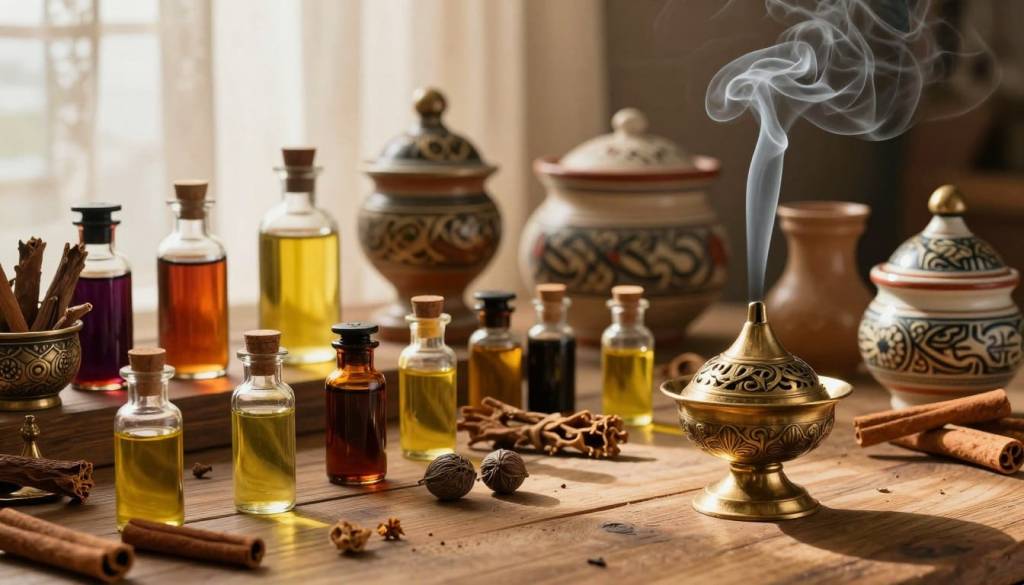
Biblical fragrances continue to play a significant role in contemporary spiritual practices. These ancient scents have found their way into modern religious rituals and personal spiritual journeys, bridging the gap between historical traditions and contemporary spirituality.
The use of biblical fragrances in modern religious practices is a testament to their enduring spiritual significance. Many churches and religious organizations have incorporated these ancient scents into their worship services and rituals.
In Australia, some churches have adopted the use of biblical fragrances as a way to connect with their spiritual heritage. For example, the use of frankincense and myrrh during special services creates a sensory experience that links contemporary worshippers to ancient traditions.
There’s a growing global interest in the use of biblical fragrances in religious and spiritual practices. This revival is not limited to Christian communities; people from various spiritual backgrounds are exploring the use of ancient scents in their rituals and meditation practices.
| Biblical Fragrance | Modern Spiritual Use |
|---|---|
| Frankincense | Used in meditation to promote mindfulness |
| Myrrh | Incorporated into rituals for protection and healing |
| Spikenard | Used in aromatherapy for relaxation and stress relief |
The modern practice of aromatherapy has roots in ancient biblical traditions. Essential oils derived from plants mentioned in the Bible, such as frankincense and myrrh, are now used in aromatherapy for their therapeutic properties. This blend of ancient wisdom and modern science has made biblical fragrances relevant in contemporary wellness practices.
The science behind sacred scents reveals the profound impact of fragrances used in biblical times. These fragrances, often considered sacred, have been used in various religious and cultural practices. Understanding their scientific basis can provide insights into their historical significance and continued use today.
Biblical fragrances such as frankincense and myrrh have been found to have significant neurological effects. Research has shown that these scents can influence mood, cognitive function, and even emotional well-being. The aroma of frankincense, for example, has been linked to reduced anxiety and stress levels.
Therapeutic benefits of these fragrances are being increasingly recognized in modern aromatherapy practices. The use of these scents can evoke powerful emotional and psychological responses, making them valuable tools for healing and relaxation.
Modern research has begun to uncover the properties of ancient aromatics used in biblical times. Studies have confirmed the therapeutic properties of these fragrances, validating their historical use.
Science has confirmed that many biblical fragrances possess therapeutic properties. For instance, myrrh has been shown to have antimicrobial properties, while frankincense has anti-inflammatory effects.
Research in Australia has identified native plants with properties similar to those of biblical fragrances. This research highlights the global significance of aromatic plants and their potential therapeutic applications.
The significance of fragrance in biblical times is a testament to its timeless power in spiritual connection and expression. From the sacred anointing oil to the fragrant gifts of the Magi, fragrance played a vital role in ancient worship and daily life.
The use of fragrance in biblical times continues to influence modern spirituality, with many still seeking to understand the sacred role of scent in their faith. The timeless power of fragrance lies in its ability to evoke emotions, create a sense of calm, and connect us to something greater than ourselves.
As we explore the continued relevance of sacred fragrance in today’s world, it becomes clear that fragrance still matters today. Whether used in religious rituals or personal devotion, fragrance has the power to transport us to a deeper state of spiritual connection.
In understanding why fragrance still matters today and its role in fragrance and spiritual connection, we can appreciate the enduring legacy of biblical fragrance traditions. As we continue to seek ways to deepen our spiritual practices, the ancient art of perfumery offers a rich and fragrant path forward.
Fragrance played a crucial role in biblical times, serving as a bridge between heaven and earth, and was used in various contexts, including daily life, ceremonial, and religious rituals.
Some of the most significant fragrances mentioned in the Bible include frankincense, myrrh, spikenard, cassia, and aloes, which were used for their medicinal, spiritual, and cultural significance.
Fragrance was used in temple worship through the burning of incense, which was a sacred ritual performed by priests to connect with the divine and symbolize prayer and sacrifice.
The holy anointing oil is a sacred fragrance described in Exodus, composed of myrrh, cinnamon, calamus, cassia, and olive oil, which was used to anoint priests, kings, and sacred objects, symbolizing divine presence and blessing.
Biblical fragrances can be used in modern spirituality through aromatherapy, meditation, and worship, providing a connection to the divine and a sense of spiritual expression.
Research has shown that biblical fragrances, such as frankincense and myrrh, have therapeutic properties, including anti-inflammatory and antimicrobial effects, which can be used to promote physical and emotional well-being.
You can incorporate biblical fragrances into your daily life by using essential oils, scented candles, or incense, and by exploring their cultural and spiritual significance through study and reflection.
Yes, there are modern attempts to recreate biblical fragrances, including perfumes and aromatherapy products, which aim to capture the essence and significance of these ancient scents.